Major Non-Ferrous Metal Materials Commonly Used in Machining
Non-ferrous metal materials possess characteristics not found in iron and steel materials, such as light weight and corrosion resistance. These properties are often utilized to their full extent in a wide range of applications, including aircraft parts that need to be lightweight and electronic parts requiring conductivity.
This section explains the features and key points for machining typical non-ferrous metal materials.
Aluminum
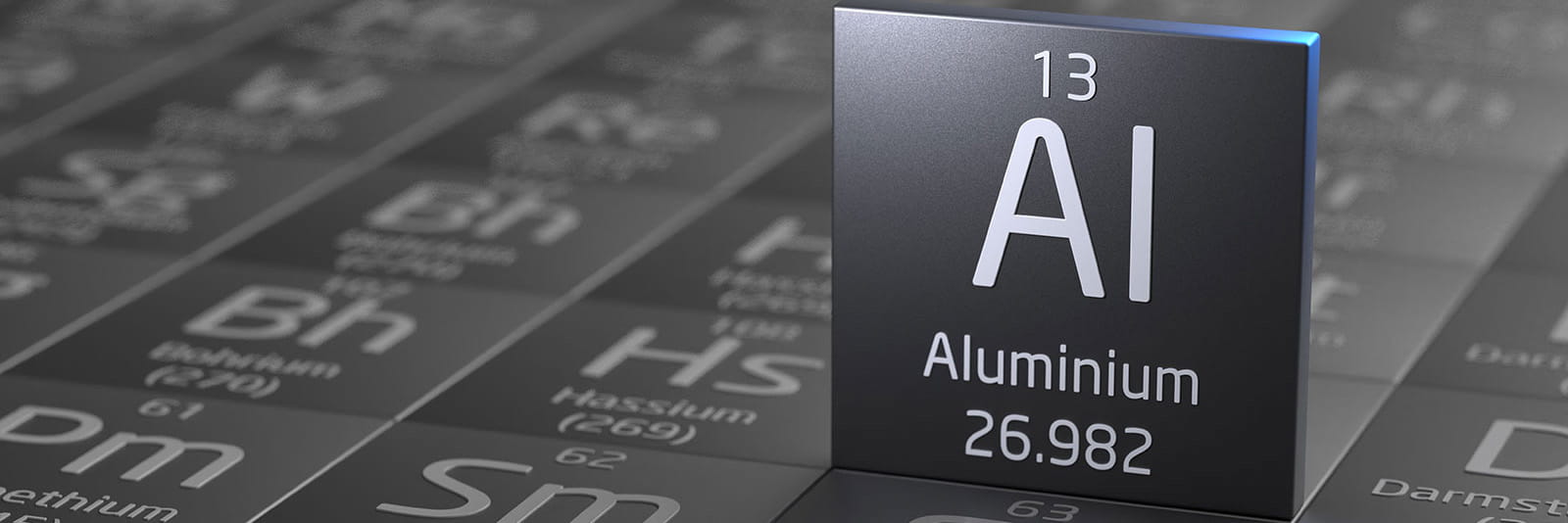
Aluminum is a non-ferrous metal that is approximately one-third the weight of iron and has excellent workability. Because pure aluminum is too soft for industrial applications, it is used as an alloy with copper, magnesium, or other elements.
Aluminum alloys are classified by their primary alloying element, ranging from the 1000 series (pure aluminum) to the 7000 series (Al-Zn-Mg system). For example, 2000 series (Al-Cu system) alloys known as "duralumin," such as A2017 and A2024, are commonly used in aircraft parts and precision machinery parts.
Key features
- Low specific gravity (2.7 g/cm³, approximately 1/3 of iron)
- High thermal and electrical conductivity
- Excellent corrosion resistance
- Strength can be improved through heat treatment
Machining can be performed at high speeds. However, the use of cutting fluids is recommended, as chips tend to adhere to the tool. Moreover, caution is required to prevent deformation when machining thin-walled components. Dealing with burrs is also important.
Magnesium
Magnesium is the lightest material of all metals with practical applications. With a specific gravity of 1.8 g/cm³, it is approximately 30% lighter than aluminum. In recent years, it has been used in components requiring extreme weight reduction, such as mobile device housings and automotive parts.
Key features
- Ultra lightweight (specific gravity 1.8 g/cm³, approximately 2/3 that of aluminum)
- Excellent vibration absorption
- High electromagnetic wave shielding
- Recyclability
Safety considerations are particularly important when machining magnesium. Magnesium is a flammable material, and its powder and chips are particularly prone to ignition. There have been documented cases of large-scale fires, so it is essential to set appropriate cutting conditions and prepare fire extinguishing equipment in advance. Additionally, because magnesium reacts with water to generate hydrogen, water-soluble cutting fluids cannot be used.
Tungsten
Among non-ferrous metals, tungsten stands out for its exceptionally high melting point (3,422°C) and density (19.3 g/cm³). Its name comes from the Swedish word for "heavy stone," and it is primarily used as a cutting tool material and for parts used in high-temperature, high-load environments. Taking advantage of its high density, tungsten is also used in golf club weights and wristwatch balance weights.
Key features
- Extremely high melting point and hardness
- Excellent wear resistance
- High thermal and electrical conductivity
- Radiation shielding capability
Tungsten is classified as a "difficult-to-cut" material, requiring the use of very hard tools for machining. In addition, cutting is generally performed at low speeds, which can reduce tool life, so the use of cutting fluids is essential.
Copper
Copper is a non-ferrous metal with high electrical and thermal conductivity.
Key features
- Boasts of a high electrical conductivity second only to silver
- Excellent thermal conductivity
- High malleability and ductility
- Moderate strength and corrosion resistance (retains strength after machining)
When machining copper, it is important to select appropriate tools and set cutting conditions carefully, as the material tends to adhere to the tool. Due to its softness and tendency to stick, it is common to increase cutting speed and use tools with large rake angles. This helps improve both the quality of the machined surface and chip evacuation.
Titanium
Titanium is a non-ferrous metal with excellent specific strength (strength-to-weight ratio) and outstanding corrosion resistance. It is used in fields requiring high reliability, such as aerospace, medical devices, and chemical plants. Pure titanium has a specific strength more than twice that of iron, and this increases even further when made into titanium alloys. Due to its excellent biocompatibility, titanium is widely used in medical implants and related applications.
Key features
- High specific strength
- Excellent corrosion resistance and biocompatibility
- Superior high-temperature strength
- Low thermal conductivity
When machining titanium, care must be taken due to its low thermal conductivity, which causes significant heat buildup during cutting and can shorten tool life. Because of its high specific strength, titanium generally requires low cutting speeds. Additionally, as it is prone to vibration-induced chatter, the use of machine tools with sufficient rigidity is recommended.
Brass
Brass is an alloy consisting primarily of copper and zinc. It offers a well-balanced combination of aesthetic appeal and workability, and is used in a wide range of applications, from mechanical parts to decorative items. C3604 (free-cutting brass) is a representative material that combines excellent machinability with moderate strength, and is used in numerous mechanical parts.
Key features
- Excellent machinability and aesthetic appeal
- Moderate strength and ductility
- Excellent corrosion resistance
- High cost-effectiveness
Brass machining is generally characterized by chips breaking into fine pieces, enabling high-speed cutting. However, due to the material's softness and high extensibility, caution is required to prevent burrs and surface scratches caused by chips. To maintain machining quality, use sharp carbide tools with large rake angles and apply oil-based coolant for cooling. Since the properties of brass vary depending on its zinc content, it is important to consider its material composition and the environment in which it will be used.