Types and Features of Tool Holders: Basics and Precautions for Use
When machining with a machining center, different cutting tools are required depending on the task. Tool holders are used to secure these tools to the machining center. There are several types of tool holders. Selecting the appropriate holder is essential for machining with high accuracy. This article provides the main types of tool holders, provides an overview of each, and gives the points to keep in mind when attaching them.
What Are Tool Holders?
Tool holders are indispensable parts when machining on a machining center. To start, we explain the basic role and types of tool holders.
Tool Holders Are Parts Used to Attach Tools to Machining Centers
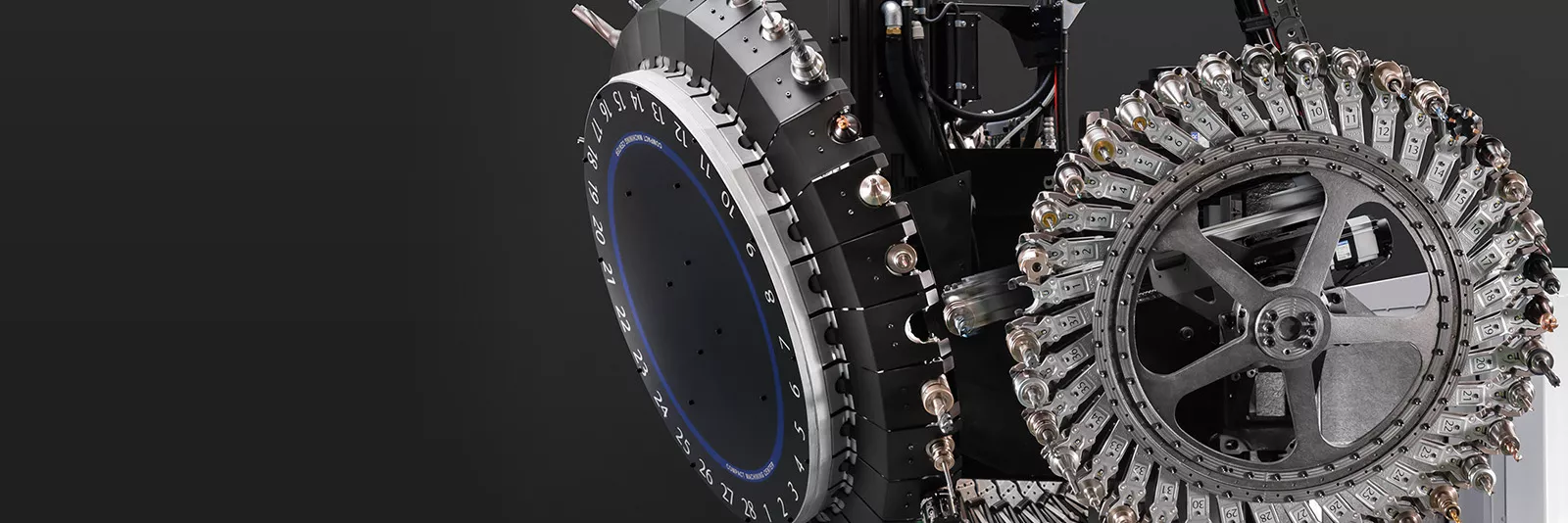
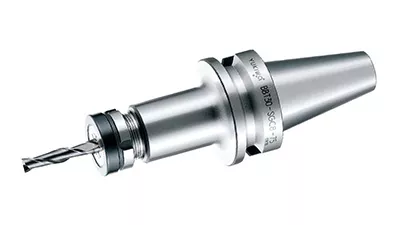
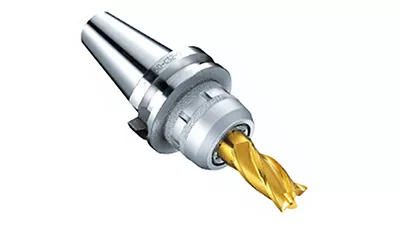
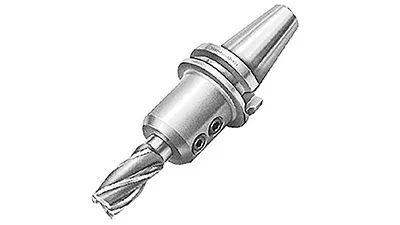
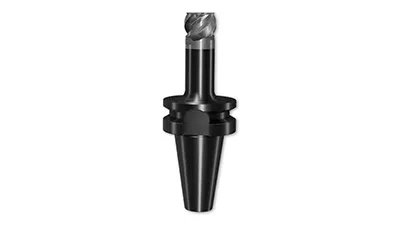
A tool holder is a part used to attach and hold the cutting tool, such as an end mill or drill, to a machining center or other equipment.
As a precondition, the shape of the spindle of a machining center is defined by ISO standards. However, to accommodate a wide variety of machining operations, cutting tools of different thicknesses, lengths, and shapes must be fixed in place. For this reason, tool holders are indispensable.
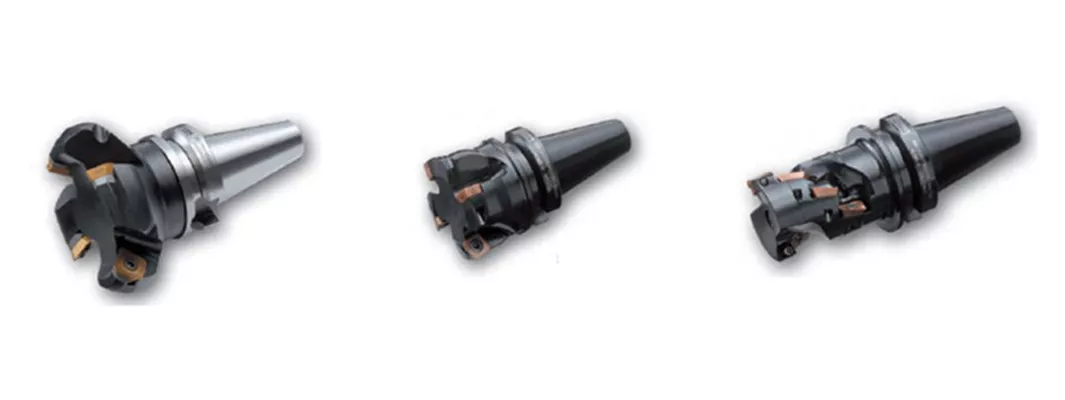
Furthermore, tool holders do more than just secure cutting tools. By combining holders with extensions and heads, it is possible to configure tools to suit specific purposes.
Note that the shapes of holders are also determined according to ISO standards. While BT standards are commonly used in Japan, other countries have their own primary standards. Additionally, as the cutting tool shank diameter increases, the holder tends to become thicker as well.
Broadly Divided Into Two Types
Tool holders are further divided into two types: "holders" and "arbors." Holders feature a concave section for holding the tool. This will be discussed in more detail later.
In contrast, arbors have a convex section for holding the tool. They are used to secure disc-shaped or cylindrical tools with large outer diameters, such as milling cutters and side cutters. Unlike holders, arbors have standardized shank diameters, lengths, key dimensions, and other features.
Main Tool Holder Types and Features
There are five main types of tool holders: collet chucks, milling chucks, shrink fit holders, hydro chucks, and sidelock chucks. This section provides an overview of each type along with their features.
Collet Chuck
Collet chucks are the most common type of holder. They are frequently used with drills, reamers, taps, and small-diameter end mills.
A collet chuck consists of a collet and a chuck unit. Tightening the nut compresses the collet, which in turn clamps the tool shank.
Collets are available in 0.5 mm increments to match cutting tool shank diameters. Use the appropriate collet that matches the diameter of cutting tool shank to be gripped. However, due to their lower gripping force compared to other holders, collet chucks are relatively unsuitable for securing thicker cutting tools.
Milling Chuck
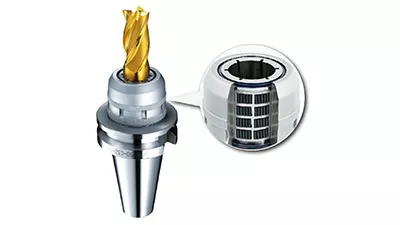
Milling chucks are holders used to grip tools with large shank diameters, such as end mills. They are also called "roll chucks." They are characterized by a strong gripping force, achieved through the use of thin, rod-shaped inner rollers (needle rollers) for clamping. Milling chucks are used in machining when force is required, such as when using large-diameter end mills.
The usable tool diameter for a milling chuck depends on the holder's hole diameter. However, precision in the shank diameter for attachment is also required, as the chuck clamps by only a few tens of microns when the holder is tightened. Additionally, because the holder itself is large, the tool length tends to be long. Bending rigidity is somewhat lower as well.
Shrink Fit Holder
Shrink fit holders involve heating the bore of the holder to expand it, then cooling it to secure the tool. Because the tool is secured by thermal expansion, there is no mechanical structure to fix it in place. This allows the holder to be made thinner than other holders relative to the cutting tool shank, avoiding interference during machining.
Another feature of shrink fit holders is that the tool is attached using specialized machines, ensuring error-free installation. Moreover, they offer superior installation accuracy, rigidity, and gripping strength, making them suitable for high-accuracy machining.
Furthermore, because these holders can be made slim, access to the workpiece is significantly improved.
However, because heat is used to secure the tool, heating and cooling the chuck takes some time. In addition, the shank diameter that can be used is fixed, limiting the number of tools that can be used.
Hydro Chuck (Hydraulic Chuck)
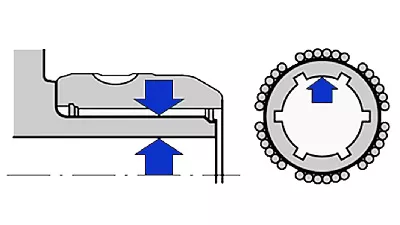
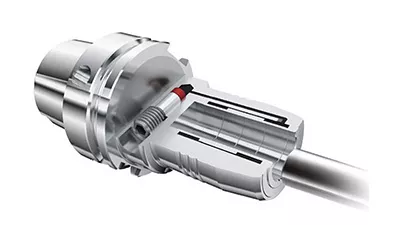
Hydro chucks are holders with internal hydraulic mechanisms. Tightening with a wrench compresses the oil inside, causing the tool-holding surface to expand and clamp the tool. They are also referred to as "hydraulic chucks."
Similar to shrink fit holders, one advantage of hydro chucks is that they can be used with slim tips. Moreover, they do not require a shrink fit device and are easier to handle than collet holders. Additionally, the oil surrounding the shank provides vibration-damping effects. However, care must be taken when handling them as the oil temperature may change while in use and their lifespan is short.
Sidelock Chuck
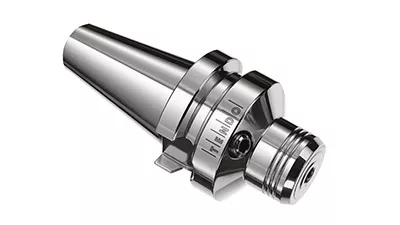
As the name suggests, sidelock chucks secure tools by fastening them from the side with screws. They offer excellent gripping force and are suitable for holding large-diameter tools. Their simple structure makes them easy to use.
However, one disadvantage of sidelock chucks is their low rigidity due to the screw fastening, which makes them prone to chatter.
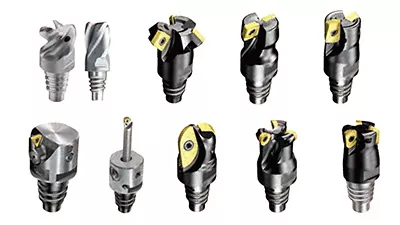
As the name suggests, integrated holders with replaceable heads integrate the holder with a cutting tool that is attached to the head. By replacing the cutting tool, the same holder size can be used for a wide range of machining tasks. Here, the cutting tool is screwed directly into the holder. This allows for shorter overall tool lengths, enhancing machining capabilities.
However, if the cutting tool is damaged, broken screw threads may remain inside the holder. This may potentially render the holder unusable. Another drawback is the relatively limited compatibility of cutting tools. Although several tool manufacturers have released integrated holders in recent years, the cutting tools that can be attached depends on the manufacturer. As a result, "attaching a cutting tool from company B to an integrated holder with replaceable head from Company A" is generally not possible.
Integrated Holder With Replaceable Tip
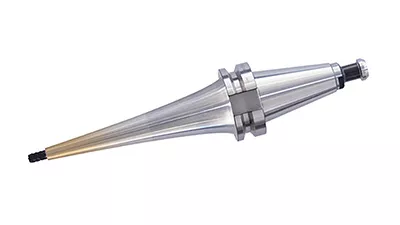
Integrated holders with replaceable tips also integrate the head and the holder, but only the tip is replaceable. Because they are integrated, the tool length itself can be shortened. They also offer higher cutting capacities than typical tool holders.
Integrated holders with replaceable tips are particularly effective when used with BT30 machine tools. BT30 machine tools are generally compact, with holders that are smaller than others and less rigidly connected to the spindle. However, using integrated holders with replaceable tips that allow for shorter tool lengths helps reduce vibration during machining. This leads to improved machining capabilities. If your company uses BT30 machine tools, you might want to consider using these tool holders.
Precautions When Attaching Tools to Tool Holders
There are several things to keep in mind when mounting tools in these tool holders. To make sure your machining goes as expected, be sure to check the following points before use.
Use the Right Tool Holder for Your Purpose and Application
Use a tool holder that matches the tool you are using. In Japan, BT holders are the norm, but there are also many other types of interfaces and standards. The interface on the tool side to match the interface on the main spindle (machine side) must be prepared.
If an incompatible interface is used, the tool will vibrate more than necessary, reducing machining accuracy. This may also shorten tool life.
Check for Scratches or Dirt on the Contact Surface
Carefully check the tool holder's contact surface for scratches, dirt, or rust. Scratches or dirt on the contact surface reduce the contact stiffness between the tool and the tool holder, resulting in lower machining accuracy. Check the contact surface every time you attach or remove the tool, and remove anything attached immediately.
Selecting the Right Tool Holder for High-Accuracy Machining
There are several types of tool holders, each with its own structures, advantages, and disadvantages. However, looking at it another way, this also means that understanding their features and mastering their use will make it easier to achieve your desired machining.
First, learn to instantly determine which tool holder best matches the machining task you want to perform. Then, it is important to use the right one. Here, we introduced five main types of tool holders and two kinds of integrated holders. Remembering the features of each of these frequently used tools will be helpful.
Author: Hiroko Shimokawa
Editor: EGGO CO., LTD.
Related Articles
Valve Basics: Introducing Valve Types, Applications, and Examples of Valve Part Machining